
Cat Constipation
Causes, warning signs, and when to call about a constipated cat in Lakeville, MN.
If your cat is spending extra time in the litter box, straining, or producing small hard stools – or none at all – constipation may be the cause. It's uncomfortable, and in some cats it becomes a recurring problem that needs a real medical plan, not just another fiber experiment.
Important: straining in the litter box can also mean a urinary blockage, especially in male cats. If you are not sure whether your cat is passing urine, treat it as urgent and call us.
This guide covers common constipation causes, warning signs, and when to contact a veterinarian in Lakeville, MN.
What Causes Constipation In Cats?
Constipation means difficult or infrequent passage of stool. Common contributors include:
- Dehydration / low water intake
- Hairballs and excess swallowed hair
- Pain (arthritis, making the box hard to use)
- Obesity and low activity
- Diet changes
- Megacolon (chronic large-bowel dysfunction)
- Pelvic injury or narrowing
- Electrolyte abnormalities or systemic disease
- Litter-box avoidance that leads to holding stool
Older cats and long-haired cats are overrepresented, but any cat can become constipated.
Don’t Just Take Our Word For It
When Is Cat Constipation An Emergency?
Repeated unproductive straining is not a wait-and-see situation.
- Has not produced stool for more than 48-72 hours and is uncomfortable
- Is repeatedly straining with no result
- Is also not urinating (rule out urinary blockage immediately)
- Is vomiting, lethargic, or hiding
- Has a painful, bloated belly
- Is crying in the litter box
- Is not eating
What To Do When Your Cat Is Straining But Still Seems Ok
If your cat is otherwise bright and you are certain they are still urinating, call us for guidance before trying home fixes. Over-the-counter laxatives and enemas meant for people can be dangerous in cats.
- When they last had a normal stool
- Diet and recent changes
- Water intake and vomiting
- Whether urine is still appearing in the box
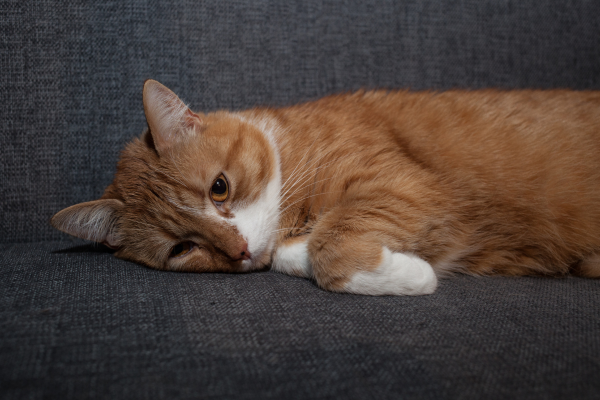
Cat Constipation Vs. Urinary Blockage
Both can look like litter-box straining. Key difference: urinary blockage is immediately life-threatening.
If there is any doubt about urine output – especially in a male cat – do not assume constipation. Get veterinary care now. We would rather check a false alarm than miss a blocked cat.
Why Families Choose Us
Family-Centered Care
Award-Winning Team
Independently Owned
How We Diagnose Constipation In Cats
- Physical exam (including abdominal palpation)
- Review of litter-box habits and diet
- X-rays to assess stool load and rule out other problems
- Bloodwork for dehydration or systemic disease
- Ultrasound when indicated
- Neurological or orthopedic assessment if pain/mobility is involved
Treatment Options For Cat Constipation
Prevention strategies may include:
- Fluids to correct dehydration
- Laxatives or stool softeners prescribed for cats
- Medical deobstipation under veterinary care when needed
- Pain control
- Diet changes (including veterinary diets when appropriate)
- Hairball management
- Long-term plans for chronic constipation or megacolon
- Hospitalization for severe or recurrent cases
- Encouraging water intake
- Weight management and activity
- Litter boxes that are easy for seniors to enter
- Regular grooming for long-haired cats
- Vet-guided diet and stool-softening plans for chronic cases
- Prompt care at the first sign of straining
Prevention strategies may include:
—
F.A.Q
Can I give my cat human laxatives?
Only if your veterinarian specifically directs a product and dose. Do not experiment.
How often should a cat poop?
Many cats stool daily, but individuals vary. A sudden change – especially with straining – matters more than a perfect calendar.
Does pumpkin fix cat constipation?
Sometimes mild cases improve with vet-guided diet changes, but pumpkin is not a cure-all.
Why does my cat keep getting constipated?
Chronic cases need a workup for hydration, diet, pain, and colon function – not repeated crisis treatment alone.
Is constipation related to kidney disease?
Dehydration from many diseases can contribute. Bloodwork helps us see the bigger picture.

Related Care and Pet Health Resources
Browse more cat health concerns or return to all pet health concerns.
Request an appointment if your pet needs veterinary care.